
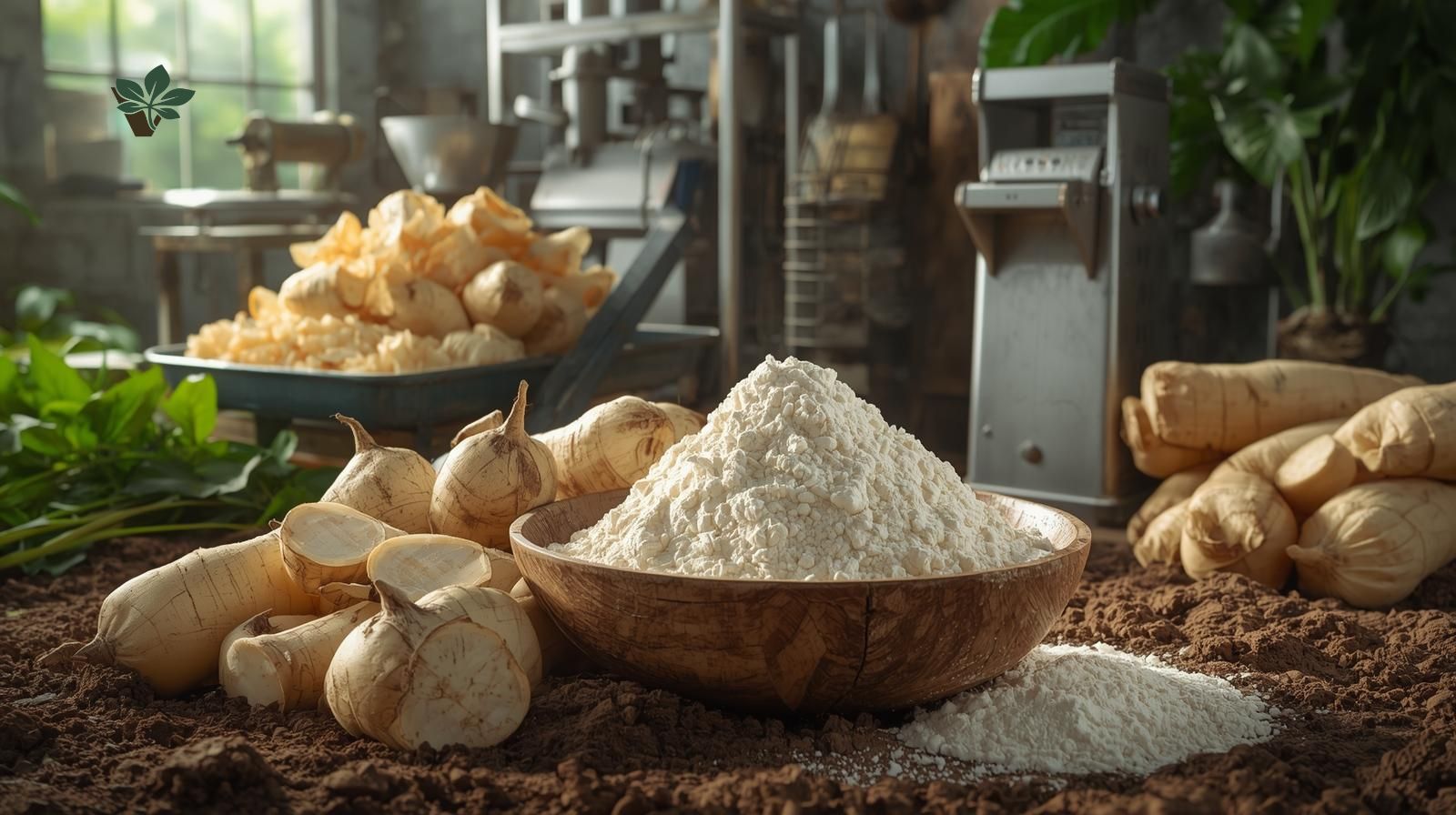
Cassava, also known as Manihot esculenta, is a staple root vegetable widely cultivated in tropical regions. Beyond its use as a basic food source, cassava can be transformed into flour and starch, versatile ingredients used in baking, cooking, and industrial applications. If you’ve ever wondered how to make flour from cassava, this guide will walk you through every step, from harvesting to processing, along with essential tips for beginners.
Why Cassava Flour is Gaining Popularity

Cassava flour has surged in popularity due to its gluten-free nature, neutral taste, and versatility. The benefits of cassava flour include:
- Rich in carbohydrates for energy
- Naturally gluten-free and suitable for celiac diets
- Can be used in baking, thickening sauces, and making traditional foods like fufu
- Long shelf life when stored properly
However, like all foods, it comes with potential cassava flour side effects if not processed correctly, mainly due to the presence of naturally occurring cyanogenic compounds in some cassava varieties. Proper preparation is crucial for safe consumption.
Step-by-Step Guide on How to Process Cassava Flour
Making cassava flour involves transforming raw roots into a dry, fine powder that can be used in baking and cooking. You can approach this in two ways: DIY home processing or industrial-scale production.
Cassava Flour Making Process
Step 1: Selecting Cassava Roots
Choose fresh, healthy roots with high starch content. At Verdantis Agro, we supply high-starch cassava roots directly from our farms in Nigeria, perfect for both flour and starch production. Our roots are clean, nutrient-rich, and ideal for bulk buyers and exporters.
Step 2: Peeling and Washing
- Peel the cassava skin carefully.
- Wash thoroughly to remove dirt and soil residues.
Step 3: Cooking (Optional for Safety)
- Boil cassava for 20–30 minutes to remove cyanide in bitter varieties. Sweet cassava may require less cooking, but always ensure safety.
How long to cook cassava to remove cyanide?
Boiling cassava for 20–30 minutes or fermenting overnight reduces cyanide to safe levels.
Step 4: Grating or Chopping
- Use a grater, food processor, or mechanical shredder to break the cassava into small pieces.
Step 5: Drying
- Spread the cassava shreds thinly and sun-dry or use a dehydrator.
- Ensure the cassava is completely dry to prevent mold growth.
Step 6: Grinding into Flour
- Grind dried cassava into fine flour using a hammer mill or blender.
- Sift the flour for a smooth, consistent texture.
Step 7: Storing
- Store cassava flour in airtight containers in a cool, dry place.
– Here’s How to Turn Cassava Root into Cassava Starch
Cassava starch, also known as tapioca starch, is different from flour and is used in both culinary and industrial applications.
Steps to extract cassava starch:
- Peel and wash cassava roots.
- Grate the cassava finely.
- Mix with water and strain through a muslin cloth to separate fibers.
- Allow the starch to settle at the bottom.
- Decant the water and dry the starch.
Verdantis Agro’s high-starch cassava roots are perfect for this process, producing pure starch suitable for export or large-scale manufacturing.
So when it comes to how to make flour from cassava,
Following these easy steps that explain how cassava flour is made will help you confidently process cassava into flour or starch safely and efficiently. With the right, starchy cassava roots from Verdantis Agro, beginners and seasoned producers alike can make high-quality cassava flour that is nutritious, versatile, and market-ready.
Frequently Asked Questions
Cassava flour is gluten-free, low in fat, and rich in carbohydrates, making it a good alternative for people with wheat sensitivities.
Soaking helps reduce cyanide content and can improve texture. Fermentation is often recommended for bitter varieties.
Yes, sun-drying works, but ensure complete drying to prevent mold.
When stored in airtight containers in a cool, dry place, Verdantis Agro’s cassava flour can last up to 12 months.
Flour is whole root, finely ground; starch is extracted from the root’s pulp and is mostly carbohydrate, with no fiber.
Yes! Cassava flour works well in gluten-free baking. While it doesn’t have the same elasticity as wheat flour, it can be combined with other gluten-free flours or used with binding agents like xanthan gum.
Peel, wash, and grate the cassava.
Boil briefly, then dry or ferment the mash.
Pound or mill into fine fufu flour, ready to cook.
Boil for 20–30 minutes or soak and ferment overnight. Avoid undercooking bitter cassava varieties.
Here’s Why You Can Trust Us To Supply High-Starch Cassava Roots
Our clients know we offer top-quality cassava roots in Nigeria:
- High starch content ideal for flour and starch production
- Freshly harvested from our nutrient-rich farms
- Wholesale prices for bulk buyers and exporters
- Global delivery available for international clients
- Trusted supplier for both small-scale and industrial processing
Whether you are starting a DIY cassava flour project or running a large-scale flour and starch production business, we provide fresh cassava roots to make sure you succeed.