
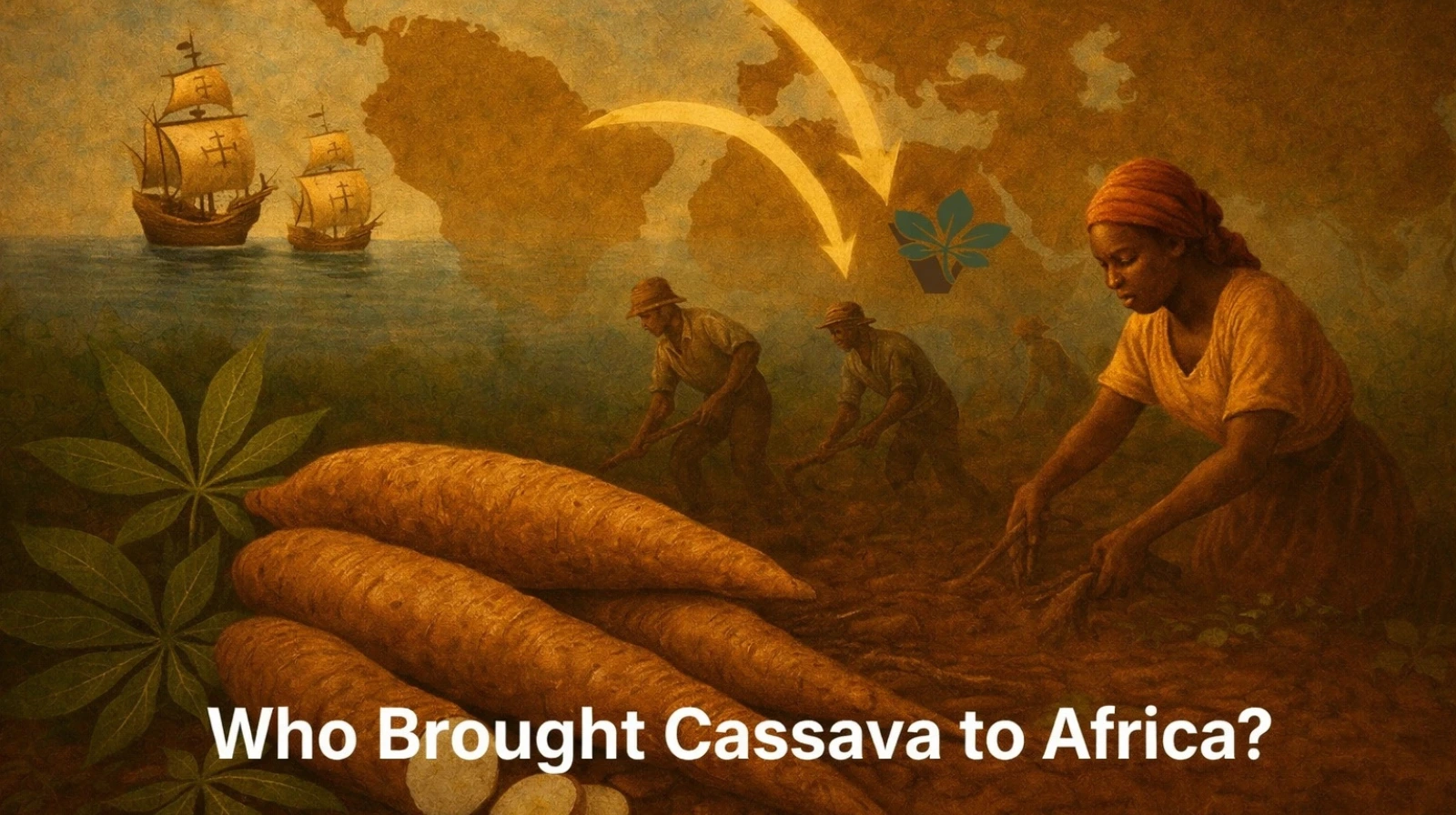
Cassava, a versatile root crop that has become a staple across Africa, has a fascinating history that traces back to South America. Its journey from the Americas to African soil is not just a tale of agriculture, but also one of adaptation, resilience, and economic growth. In this article, we will explore who brought cassava to Africa, how it got to Nigeria, the top cassava-producing countries in Africa, and why it has become such an essential crop. We’ll also answer popular questions like “which is healthier, potato or cassava?”, “is yam better than cassava?”, and “who is the richest cassava farmer in Nigeria?”.
Where Does Cassava Originally Come From?
Cassava, scientifically known as Manihot esculenta, is native to South America, specifically the Amazon basin, covering modern-day Brazil and Paraguay. Indigenous people in this region were the first to cultivate cassava, recognizing its starchy, drought-resistant roots as a critical food source.
Why Did Cassava Spread So Quickly Across Africa?
Cassava became widespread across Africa because of a combination of factors:
- It is very hardy, capable of growing in poor soils, tolerating drought, and surviving in marginal conditions that would limit other staples.
- It can be stored in the ground for extended periods without spoiling, giving a safe “reserve food” during lean seasons.
- The crop is very versatile: cassava roots can be processed into flour, starch, or eaten boiled; leaves can be used as vegetables, offering flexibility for different uses (food, animal feed, industrial).
- As populations grew and traditional staples (yams, millet, etc.) fluctuated due to climate or pests, cassava offered a reliable and high-yielding alternative, helping strengthen food security across many regions.
How Did Cassava Get to Nigeria?
Cassava likely arrived in Nigeria in the 16th or 17th century via Portuguese traders and missionaries who brought it from Brazil to West Africa. It may have first entered coastal regions like Lagos, Calabar, and the Niger Delta, before spreading inland through local trade routes and exchanges between farming communities. Its adaptability to diverse soils and resistance to drought allowed it to quickly become a staple crop across southern and central Nigeria.
Varieties of Cassava Grown Across Nigeria

Nigeria is the largest cassava-producing country in Africa, with farmers cultivating a wide range of cassava varieties suited for everything from household consumption to large-scale industrial processing. Understanding these varieties is essential for farmers, exporters, and agribusinesses alike.
Cassava varieties in Nigeria can be broadly categorized into: Sweet, Bitter, and High-Starch (Industrial) types, each adapted to specific regions and purposes.
| Cassava Type | Popular Varieties in Nigeria | Primary Region(s) Grown | Key Features / Uses |
|---|---|---|---|
| Sweet Cassava | TMS 30572, TME 419, IITA 101 | Southwest (Ogun, Oyo, Ondo), Southeast (Enugu, Abia) | Low cyanide content, safe for direct boiling or frying, used in fufu, gari, and domestic meals |
| Bitter Cassava | NR 8082, TMS 4(2)1425, TMS 50395 | Southeast (Anambra, Imo), South-South (Rivers, Delta) | Higher cyanide content, requires soaking/fermentation; ideal for gari and fermented products |
| High-Starch / Industrial Cassava | TME 419, TMS 98/0505, TMS 91/02324 | Southwest (Ondo, Oyo), North Central (Benue, Kogi) | High starch yield, suitable for flour, starch, industrial food processing, and export |
| Vitamin A-Fortified Varieties | IITA Biofortified TMS 01/1371, TMS 01/1412 | Southeast & Southwest | Nutrient-rich, combats vitamin A deficiency, suitable for fufu, gari, and other processed products |
| Local Landraces / Traditional Varieties | Akpu, Garri-type varieties | Nationwide, depending on soil & farmer preference | Adapted to local conditions, used for home consumption and small-scale trade |
Who Is The Richest Cassava Farmer in Nigeria?
While exact figures fluctuate, notable entrepreneurs like Chief Funke Opeke and large-scale farm operators in Ondo and Benue States are among Nigeria’s wealthiest cassava investors due to their large-scale production and processing ventures.
Top Cassava-Producing Countries in Africa
Thanks to its widespread adoption, Africa now produces a large share of global cassava; some countries lead significantly. According to recent production data:
| Country (or Region) | Approx. Annual Cassava Production (metric tons) / Status |
|---|---|
| Nigeria | ~ 62.7 million tons — leading globally and in Africa |
| Democratic Republic of the Congo (DRC) | ~ 45.2 million tons. |
| Ghana | ~ 26.5 million tons. |
| Angola | ~ 11.2 million tons. |
| Mozambique | ~ 7.6 million tons. |
Overall, about half of global cassava production occurs in Africa, cultivated across roughly 40 countries from Madagascar in the southeast to Senegal and Cape Verde in the northwest.
Cassava vs Other Staple Foods
– Which is healthier, potato or cassava?
Cassava is higher in calories and carbohydrates than potatoes but lower in protein. It’s excellent for energy, but potatoes provide more vitamins like C and potassium.
– Is yam better than cassava?
Both have unique benefits. Yams are higher in fiber and micronutrients, while cassava is drought-resistant and calorie-dense, making it vital for food security in tropical climates.
So then, who brought cassava to Africa?
Cassava’s journey from South America to Africa illustrates the power of trade, adaptation, and innovation in agriculture. Today, Nigeria leads the world in cassava production, and companies like Verdantis Agro are turning this humble root into high-quality products for global markets. From its nutrient-rich varieties to its versatile forms like flour and starch, cassava remains an essential crop that continues to shape African agriculture and food security.
Whether you are an exporter, bulk buyer, or culinary enthusiast, Verdantis Agro is your trusted partner for premium cassava products in Nigeria.
FAQs About Cassava
Cassava originated in South America, particularly Brazil and Paraguay.
It was introduced by Portuguese traders in the 16th century and spread due to its adaptability.
In Nigeria, the most common variety of cassava include; sweet, bitter, and high-starch cassava.
Sweet cassava can be eaten cooked, but bitter cassava must be processed to remove cyanide.
Nigeria is the top producer, followed by the Democratic Republic of Congo and Ghana.
Yes, nutrient-enriched varieties are used to combat vitamin A deficiency across several African countries.
Yes, cassava flour is naturally gluten-free, making it suitable for people with celiac disease or gluten intolerance.
Choose Nigeria’s Top Cassava Processing Company, Always!
For exporters and bulk buyers looking for high-quality cassava roots, Flour, and starch, we are the best choice you’ll find in Nigeria because we provide:
- Farm-fresh cassava processed to international standards
- Competitive wholesale prices for bulk buyers
- Local delivery and global export services
- A wide variety of cassava products for industrial and culinary uses
Verdantis Agro ensures that your cassava products retain maximum nutrition and quality, making it a reliable partner for businesses across the globe.