
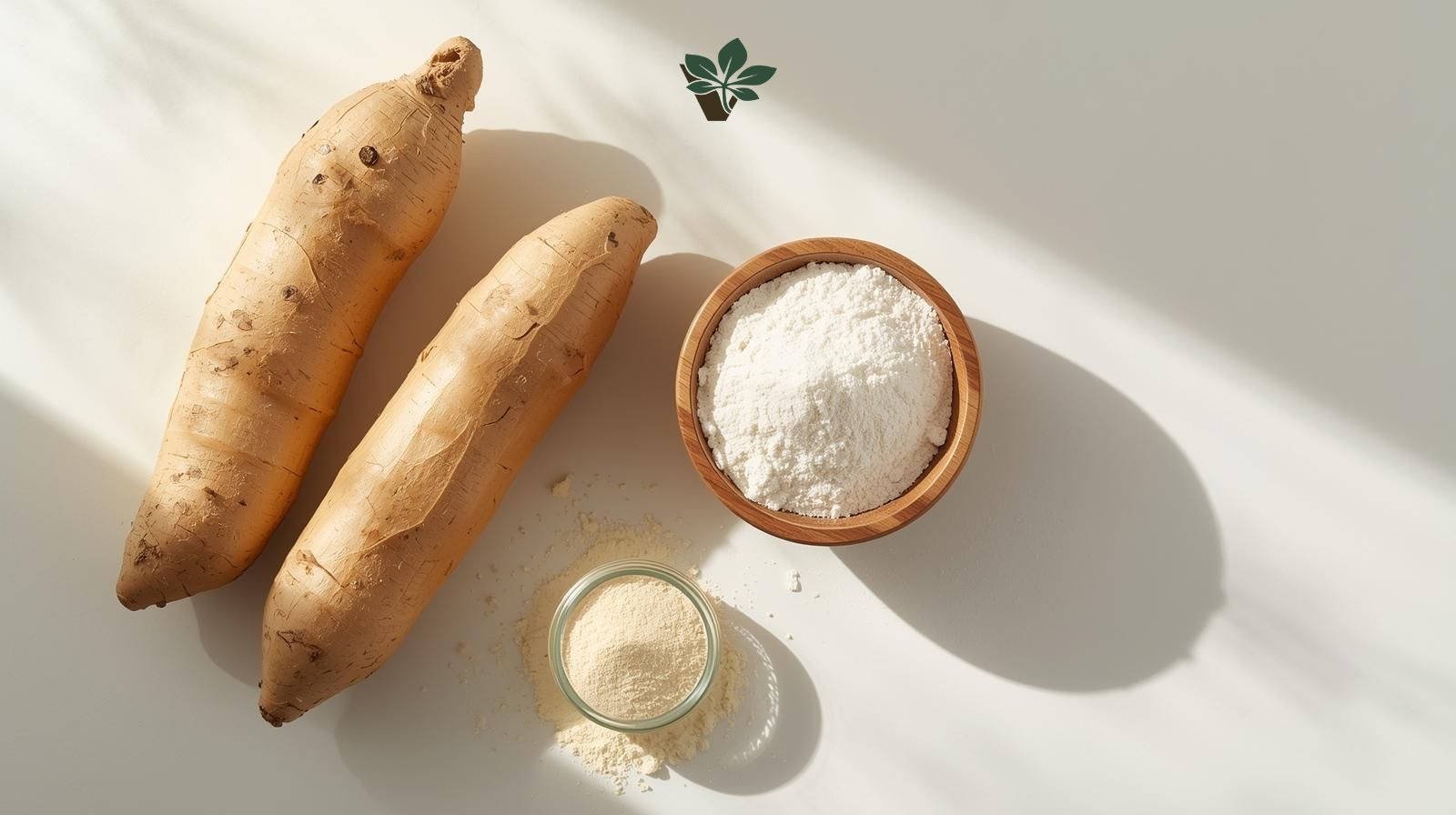
When researching plant-based thickeners, gluten-free flour substitutes, or industrial starch options, one question appears frequently: Is tapioca starch the same as cassava starch?
The short answer: Not so shocking! Yes, tapioca starch and cassava starch come from the same root, but they are not always processed the same way.
This article breaks down the differences, similarities, uses, and nutritional questions surrounding cassava vs tapioca, and helps buyers, exporters, and manufacturers choose the right option for their needs.
We also highlight Verdantis Agro, Nigeria’s trusted supplier of high-quality cassava roots for both local and international markets.

Cassava vs Tapioca: What’s the Difference?
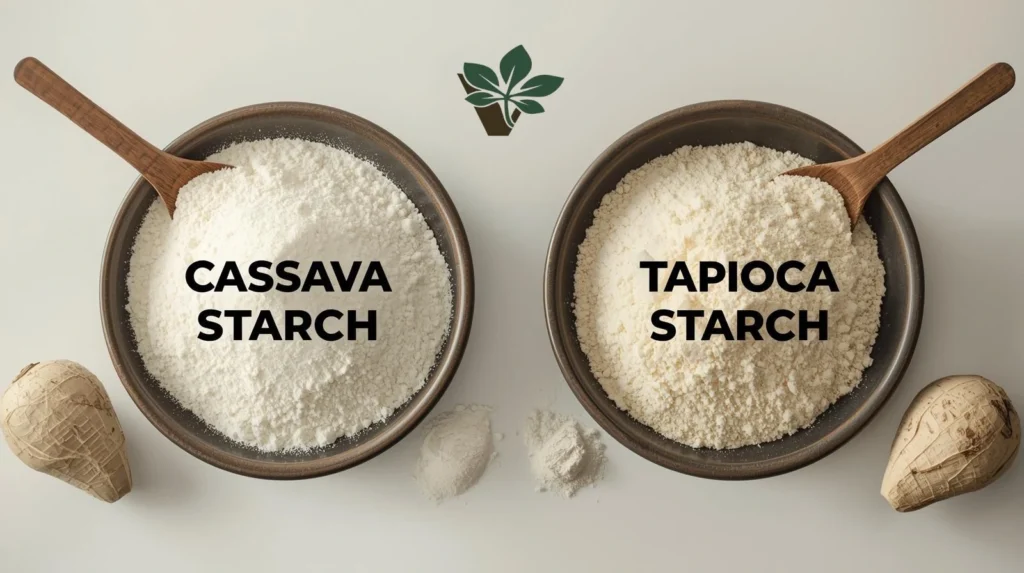
Cassava is a root crop scientifically known as Manihot esculenta. When the cassava root is peeled, pulped, washed, and processed to remove its fiber, the pure starch extracted is known as tapioca starch.
In short:
- Cassava Root = The whole tuber
- Cassava Flour = Ground whole cassava
- Tapioca Starch = The extracted starch from cassava
Is Tapioca Starch the Same as Cassava Starch?
Yes, tapioca starch is the same as cassava starch.
Tapioca starch is simply the purified starch extracted from cassava roots. However, depending on processing methods, regions sometimes label them differently:
| Term | Meaning | Uses |
|---|---|---|
| Cassava Starch | Broad term for starch extracted from cassava | Used in food & industrial applications |
| Tapioca Starch | More refined form of cassava starch | Mostly used in food products |
| Tapioca Flour | U.S. term for tapioca starch | Same thing as tapioca starch |
Why Our Tapioca/Cassava Starch is Popular Worldwide
✔ Gluten-free
✔ Odorless & flavorless
✔ Excellent thickening and binding properties
✔ Very stable when frozen and reheated (unlike cornstarch)
✔ Used in both industrial and food applications
Cassava Root, Flour & Starch: What They Are, Their Composition & Their Uses
Understanding the differences between cassava root, cassava flour, and cassava starch is crucial for buyers, processors, and exporters. Though they come from the same plant, each product serves unique functions in food, industry, and manufacturing.
1. Cassava Root
- What It Is: Cassava root is the whole tuber harvested from the Manihot esculenta plant. It is a starchy, high-energy crop widely grown across Africa, South America, and Asia. The root is the raw material used to produce cassava flour, tapioca starch, garri, fufu, and other derivatives.
- Composition: Cassava root typically contains:
- 60–70% moisture
- 20–30% carbohydrates (mostly starch)
- 1–2% protein
- 1–2% fiber
- Minor amounts of calcium, vitamin C, and B vitamins
Cassava root also contains naturally occurring cyanogenic glycosides, which must be removed through proper processing.
- Uses: Cassava root is used for:
- Food products such as garri, fufu, abacha, tapioca pearls, and cassava chips
- Animal feed
- Commercial processing into cassava flour and starch
- Ethanol and biofuel production
- Export markets requiring high-starch raw cassava
2. Cassava Flour
- What It Is: Cassava flour is made from the entire cassava root, peeled, dried, and finely ground. Unlike tapioca starch (which is pure starch), cassava flour contains all components of the root. It is gluten-free and has a mild flavor, making it popular in baking and food processing.
- Composition: Cassava flour includes:
- 70–80% carbohydrates (mostly starch)
- 2–3% protein
- 2–4% fiber
- Low fat
- Essential minerals (magnesium, potassium)
- Trace vitamins
It is richer in dietary fiber compared to tapioca starch because the whole root is used.
- Uses: Cassava flour is commonly used for:
- Gluten-free baking (bread, pastries, pancakes, snacks)
- Thickening soups, sauces, and stews
- Snack manufacturing (chin chin, crackers, cassava-based snacks)
- Commercial food formulations
- Replacing wheat flour in certain recipes
It is preferred by manufacturers who want a full-bodied flour with more texture and nutrition.
3. Cassava Starch (Tapioca Starch)
- What It Is: Cassava starch, commonly known as tapioca starch, is the pure, refined starch extracted from cassava roots. During production, the fibrous parts are removed, leaving a smooth, white, odorless starch with excellent binding and thickening properties.
- Composition: Cassava starch contains:
- 88–95% carbohydrates (almost entirely starch)
- 0% gluten
- Very low protein and fiber content
- High amylopectin, which gives it strong gelatinization properties
It is one of the purest food starches in the world.
- Uses: Cassava starch is used in both food and industrial sectors:
Food Industry
- Thickening soups, gravies, custards, and pie fillings
- Producing tapioca pearls and instant puddings
- Binding in sausages and processed meats
- Bakery and snack production
- Baby food formulations
Industrial Uses
- Paper and packaging adhesives
- Textile sizing and finishing
- Pharmaceuticals (capsules, tablets)
- Biodegradable plastics
- Glue and binder formulations
- Cosmetics and personal-care products
Its versatility and stability make it one of the most in-demand starches globally.
If you’re a bulk buyer, food manufacturer, or exporter, the quality of your cassava products determines the performance of your final product.
Some Frequently Asked Questions
Cassava starch is commonly known as tapioca starch, tapioca flour, or simply tapioca in many countries.
Cassava is slightly healthier because it contains fiber, vitamins, and minerals from the whole root.
Tapioca is pure starch and provides mostly carbohydrates with minimal nutrients.
Not exactly. They come from the same plant, but:
Cassava = root crop
Tapioca = starch extracted from cassava
Cassava is naturally safe when properly processed.
Potential issues include:
Cyanide exposure from raw or poorly processed cassava
High carbohydrate content
Not ideal for extremely low-carb diets
Regardless, properly processed tapioca starch (like the one Verdantis Agro produces) is safe, toxin-free, and food-grade.
Yes. Tapioca starch is naturally 100% gluten-free, making it ideal for gluten-free baking and cooking.
Absolutely. Cassava starch is widely used in:
Paper production
Pharmaceuticals
Textiles
Adhesives
Bioplastics
Food manufacturing
Its viscosity and gel strength outperform many other starches.
Nigeria, Thailand, and Brazil are leading producers.
Nigeria, especially, offers high-starch-yield cassava varieties and Verdantis Agro is among the top manufacturers supplying export-grade starch to global buyers.
There’s no doubt that…
Verdantis Agro stands out as the leading cassava root supplier in Nigeria because we provide:
✔ Farm-fresh, high-yield cassava roots
✔ Bulk wholesale pricing for distributors & manufacturers
✔ Reliable delivery across Nigeria & worldwide export support
✔ Strict quality control & consistent moisture and starch levels
Whenever you require a dependable supply for food processing, pharmaceuticals, industrial formulations, livestock feed, or export distribution, we deliver every shipment with guaranteed purity, consistent quality, and professional logistics.