
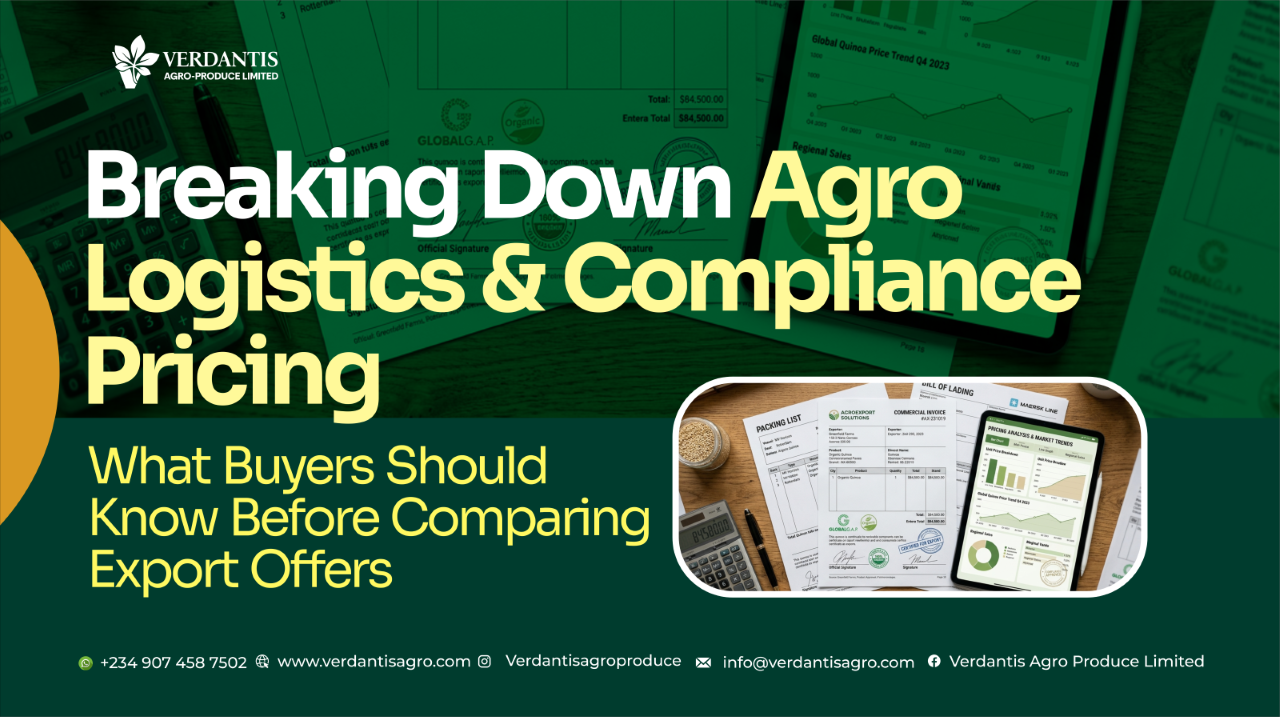
For international buyers sourcing agricultural commodities from Africa, comparing export offers can sometimes be confusing. Prices for similar commodities may vary significantly between suppliers, even when the product quality appears similar.
In many cases, the difference lies in agro logistics and compliance costs, which are critical components of international agricultural trade.
Understanding what goes into agro logistics and export compliance pricing helps buyers evaluate offers more accurately, avoid hidden risks, and build reliable supply partnerships. It is essential to consider agro export logistics pricing when making sourcing decisions.
This article explains the key components of agro export logistics and compliance pricing that buyers should understand before selecting a supplier.
What Is Agro Export Logistics and Compliance Pricing?
Agro export logistics refers to the processes involved in preparing, handling, and transporting agricultural commodities from production regions to international markets.
Compliance pricing refers to the cost of meeting export regulations, quality standards, and documentation requirements necessary for international trade.
Together, these elements form a major part of the total export price for agricultural commodities.
Typical logistics and compliance components include:
- Commodity aggregation and sourcing
- Quality inspection and grading
- Cleaning and drying processes
- Packaging and bagging
- Export documentation preparation
- Customs clearance procedures
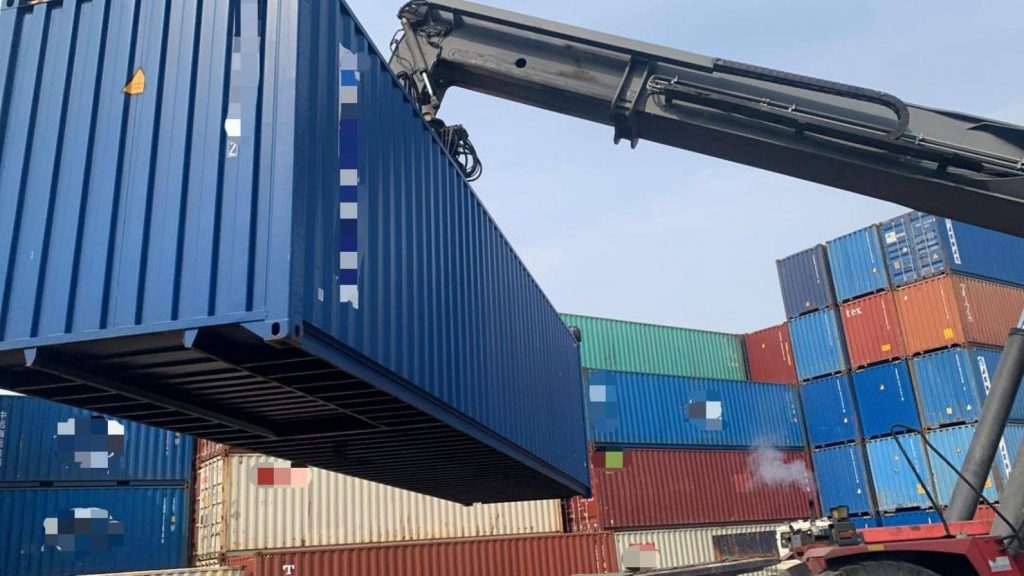
- Port handling and container loading
- International freight arrangements
When these processes are properly structured, they ensure agricultural products reach buyers in compliant and export-ready condition.
Understanding Agro Export Logistics Pricing
Ultimately, buyers should prioritize transparency in agro export logistics pricing to ensure fair and competitive offers. Agricultural export pricing often includes multiple operational stages before the commodity reaches the port.
1. Commodity Sourcing and Aggregation
Agricultural commodities are often sourced from multiple farming communities and aggregation centers before export.
This stage includes:
- Transportation from farms
- Commodity sorting and consolidation
- Supplier verification
Efficient aggregation ensures consistent supply volumes and traceability.
2. Quality Inspection and Commodity Grading
Quality inspection is necessary to confirm that agricultural commodities meet buyer specifications and international food safety standards.
Typical inspection activities include:
- Moisture testing
- Removal of foreign materials
- Grading based on commodity quality
- Pest and contamination checks
These processes help reduce the risk of shipment rejection.
3. Processing and Packaging
Before shipment, many commodities require processing steps such as cleaning, drying, or sorting.
Packaging is also critical to protect commodities during inland transport and ocean freight.
Common packaging requirements include:
- Durable export-grade bags
- Accurate weight measurement
- Proper labeling for traceability
Export Compliance Costs Buyers Should Understand
Export compliance involves regulatory procedures required to move commodities across international borders.
These compliance steps contribute to the final export price.
1. Export Documentation
Agricultural exports typically require several documents, including:
- Commercial invoice
- Packing list
- Phytosanitary certificate
- Certificate of origin
- Bill of lading
Preparing these documents ensures shipments comply with both Nigerian export regulations and importing country requirements.
2. Quality Certification and Inspection
Export commodities may require certification from regulatory agencies or independent inspection companies to confirm product quality and safety standards.
These certifications provide buyers with confidence in the shipment.
3. Customs and Port Handling Charges
Before export shipments leave the port, exporters must complete customs clearance procedures and pay handling charges associated with cargo movement within the port.
These operational costs form part of export logistics pricing.
Why Export Prices Vary Between Suppliers
When buyers compare export offers from different suppliers, price variations often occur due to differences in logistics structure and compliance processes.
Some suppliers may quote lower prices by excluding certain logistics services, while others include comprehensive export preparation costs within their pricing.
Key factors that influence price differences include:
- Quality inspection procedures
- Export documentation handling
- Packaging standards
- Logistics coordination
- Compliance verification
Understanding these components helps buyers make informed sourcing decisions.
Africa’s Growing Agricultural Export Sector
Africa as continent continues to expand its agricultural export sector, supplying commodities such as sesame seeds, cassava products, soybeans, hibiscus, and shea nuts to international markets.
As demand grows, structured agro logistics systems are becoming increasingly important for maintaining product quality, regulatory compliance, and reliable supply chains.
For buyers sourcing commodities from the region, working with experienced export partners can help streamline logistics processes and minimize operational risks.
The Importance of Working With Structured Export Partners
Reliable export partners play a critical role in coordinating agro logistics and compliance procedures.
Experienced agricultural export companies typically manage:
- Supplier network verification
- Commodity aggregation
- Quality inspection processes
- Documentation preparation
- Export logistics coordination
- Shipment tracking
These services help ensure agricultural commodities move efficiently from farms to global markets.
How Verdantis Agro Produce Supports Agro Export Logistics
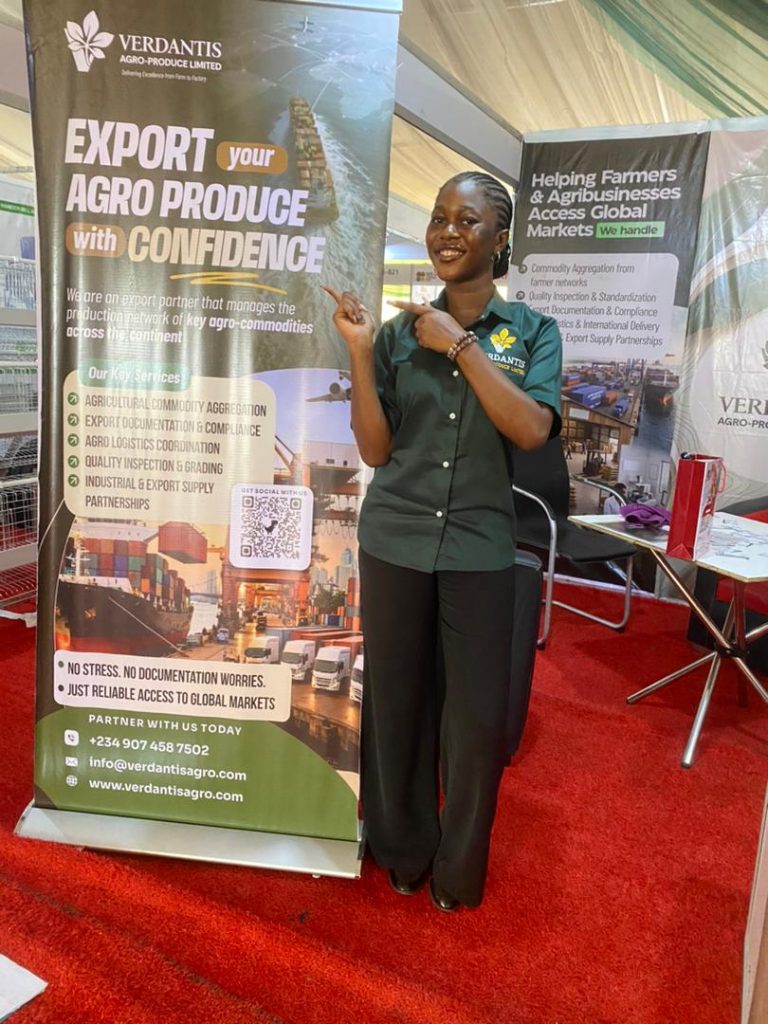
Verdantis Agro Produce Limited works with farmer networks and commodity suppliers to facilitate structured agricultural sourcing and export logistics.
Our approach focuses on:
- Responsible commodity aggregation
- Strict quality inspection and grading
- Moisture-controlled storage practices
- Standardized packaging procedures
- Export documentation coordination
- Organized shipment logistics
Through these processes, Verdantis Agro helps ensure agricultural commodities meet buyer specifications and international export standards before shipment.
Frequently Asked Questions About Agro Logistics and Compliance Pricing
Why do export offers vary between agro commodity suppliers?
How can buyers compare agro export offers effectively?
What costs are included in agro export logistics?
What are the 5 steps of the export process?
Product Preparation
Documentation
Shipping and Logistics
Customs and Compliance
Need Reliable Agro Commodity Supply?
Verdantis Agro Produce supports international buyers by facilitating structured sourcing, quality inspection, export documentation, and agro logistics coordination for agricultural commodities from Africa.
Buyers interested in reliable sourcing partnerships can contact our team (business@verdantisagro.com) to discuss supply requirements.